Choose Your Nearest ClinicNeed help deciding? Call Us· Mon–Sun 10am–8pm +91 9015401540
Hearing aid guide

Types of hearing aids

Hearing aids come in a few main styles. Some sit behind the ear. Others sit in the ear or deep inside the ear canal. Each type of hearing aid has its own balance of size, comfort, ease of handling and features.

This guide compares the hearing aid types you will hear about most often: BTE, RIC, ITE (with ITC), CIC and IIC. It explains where each one sits, how visible it is and who it may suit.

At a glance
  • Behind the ear: BTE and RICThe main part sits behind the ear. Often easier to handle.
  • In the ear: ITE and ITCCustom shells that fill part of the outer ear. Everything is in one piece.
  • In the canal: CIC and IICVery small shells inside the ear canal. Not every ear can fit one.

Hearing aid types compared

Use this table as a starting point. It shows the usual pattern for each style. Individual models differ, so check the details with the clinic before you decide.

Comparison of BTE, RIC, ITE and ITC, CIC and IIC hearing aids
TypeWhere it sitsVisibilityTypical featuresWho it may suit
BTE (behind the ear)Behind the ear. A tube carries sound to an earmould or soft dome in the ear.Visible behind the ear. Many come in skin or hair tones.Room for a larger battery and stronger amplification. Many models have rechargeable batteries and Bluetooth.A wide range of hearing loss, from mild to profound. Often used for children and for people who need a sturdy device.
RIC (receiver in canal)A small body behind the ear. A thin wire runs to a speaker, called the receiver, inside the ear canal.Discreet. The body is mostly hidden behind the ear.Often available with rechargeable batteries, Bluetooth streaming and app control.Many people with mild to moderate hearing loss, and some with more severe loss when a stronger receiver is used.
ITE and ITC (in the ear, in the canal)A custom shell made from an impression of your ear. ITE fills the outer bowl of the ear. ITC is smaller and sits lower, at the canal opening.Visible in the ear, but nothing sits behind the ear.Easier to handle than the smallest styles. Some models have Bluetooth or rechargeable batteries.Mild to moderately severe hearing loss for many models. People who wear glasses and prefer nothing behind the ear.
CIC (completely in canal)A custom shell that sits inside the ear canal. A small pull cord helps you take it out.Very discreet. Usually hard to see from the side.Usually a small disposable battery. Fewer buttons and wireless features because of its size.Mild to moderate hearing loss, in an ear canal that is wide enough.
IIC (invisible in canal)A custom shell that sits deep in the ear canal, past the first bend.Usually not visible to other people.A very small battery, few or no controls and limited wireless features.Mild to moderate hearing loss, an ear canal of the right size and shape, and steady fingers for handling.

The hearing loss levels in this table are general guides only. Your hearing test decides which styles are suitable for you.

Each hearing aid style explained

A short guide to each style. Open a style to read more about how it works, who it may suit and how to look after it.

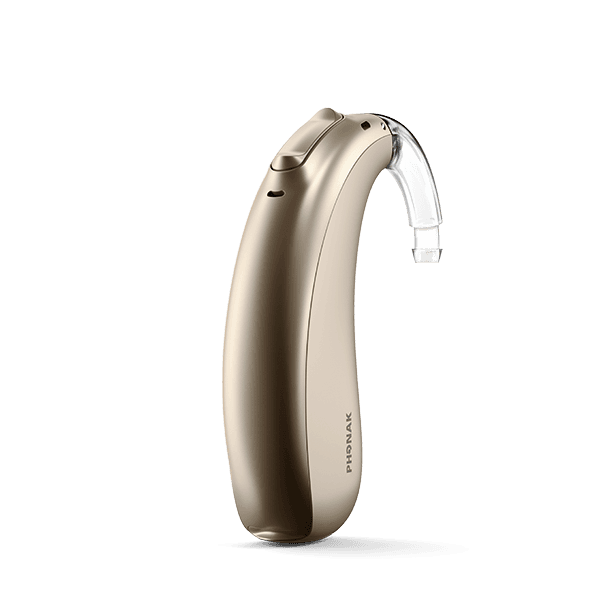
A behind-the-ear (BTE) hearing aid with its sound tube

BTE hearing aids

A BTE hearing aid sits behind the ear and sends sound through a clear tube to an earmould or soft dome. The larger body is easier to hold and clean, and it has room for more power. That is why BTE devices are often chosen for children and for more severe hearing loss.
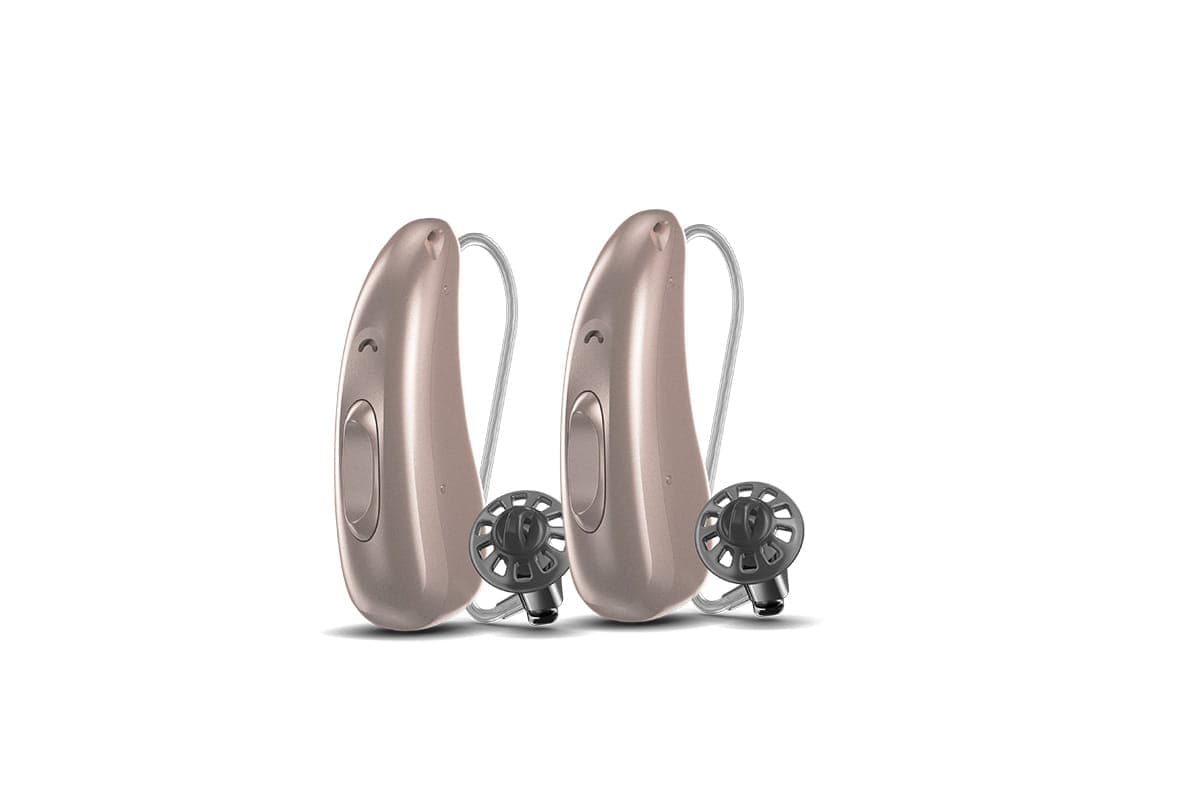
A receiver-in-canal (RIC) hearing aid with a thin wire and dome

RIC hearing aids

A RIC hearing aid looks like a small BTE, but the speaker sits inside the ear canal at the end of a thin wire. This keeps the part behind the ear small and light. Many RIC models are rechargeable.

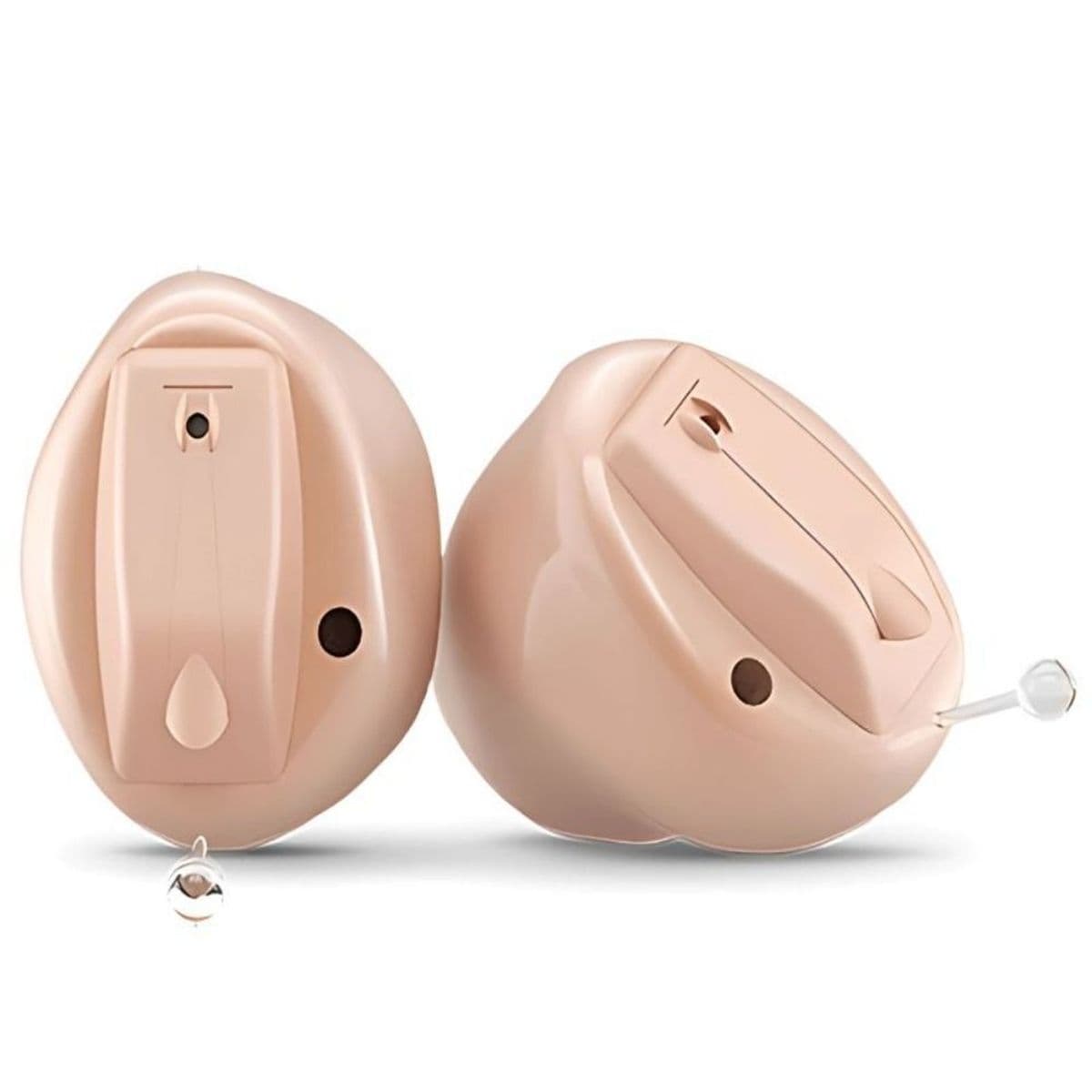
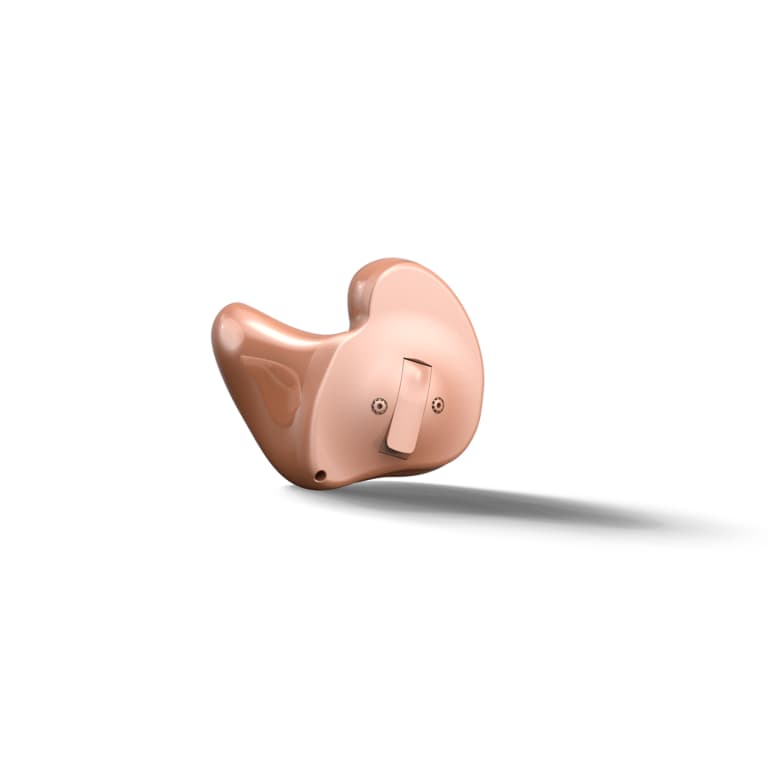
A custom in-the-ear (ITE) hearing aid shell

ITE and ITC hearing aids

ITE and ITC hearing aids are made from an impression of your ear, so they follow its shape. Everything sits in one piece inside the ear, and they are usually easier to handle than the smallest styles. ITC is a little smaller than ITE.

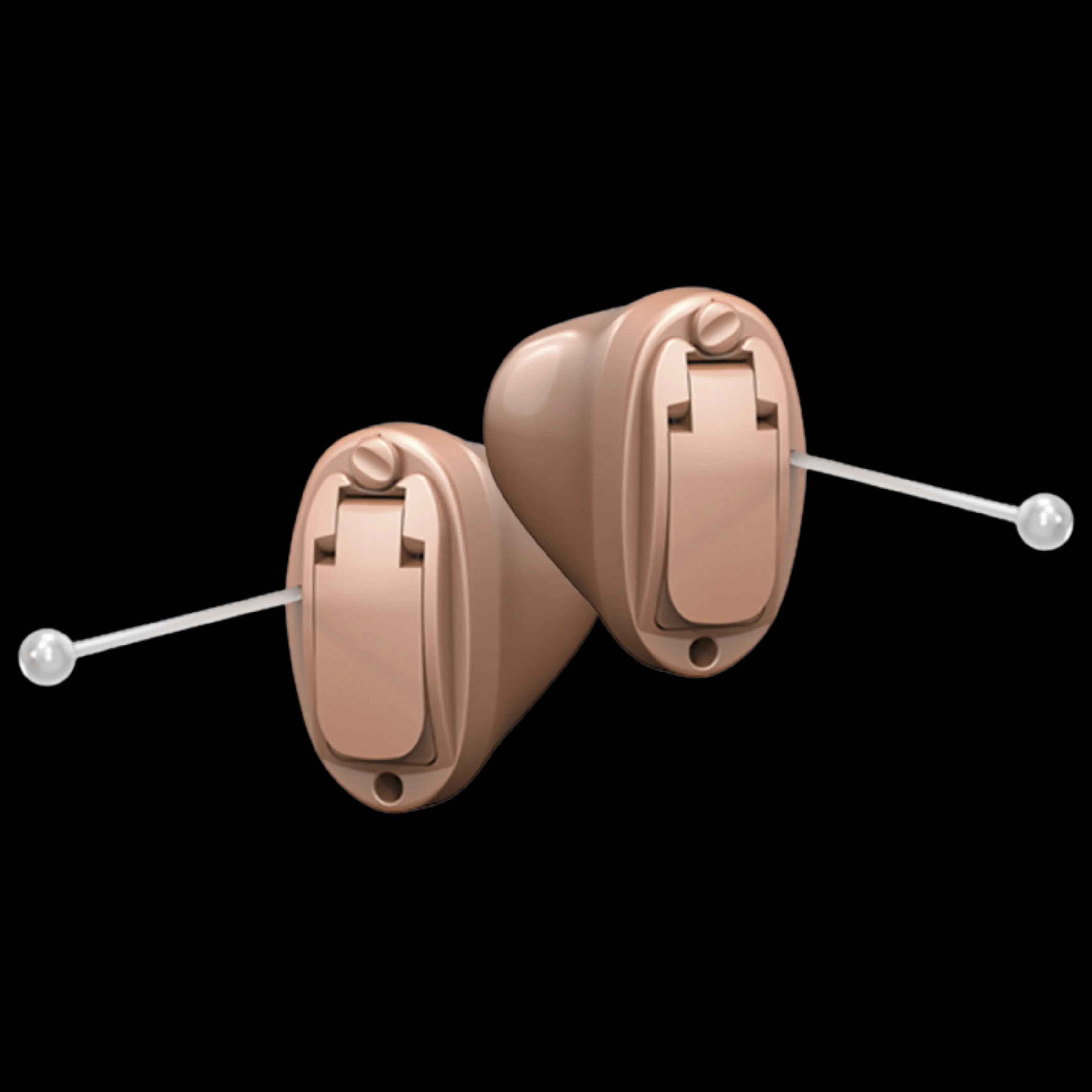
A completely-in-canal (CIC) hearing aid with a removal cord

CIC hearing aids

A CIC hearing aid sits fully inside the ear canal, so it is small and discreet. Because it is so small, it usually runs on a tiny disposable battery and has fewer controls.

An invisible-in-canal (IIC) hearing aid

IIC hearing aids

An IIC hearing aid sits deeper in the canal than a CIC and is usually not visible. Not every ear can fit one. A narrow or sharply curved canal, a lot of earwax or moisture can rule it out.

Rechargeable and Bluetooth options

Rechargeable batteries and Bluetooth are features, not separate types. You will find them most often in BTE and RIC hearing aids, because there is more room for a built-in battery and an antenna. Some ITE models have them too. The smallest CIC and IIC styles usually run on disposable batteries.

Our guide to rechargeable hearing aids explains how charging works, how it compares with disposable batteries and what Bluetooth streaming can do.

Comparing brands as well?

Every style above is made by several brands. See the hearing aid brands we fit: Phonak, ReSound and Signia.

How to choose the right type

No single type suits everyone. When we help you choose, we look at these points together.

Your hearing test results: how much hearing loss you have, and at which pitches
The size and shape of your ear canal
Ear health, such as earwax build-up, moisture or a history of ear discharge
How easy it is for you to handle small parts and batteries
Whether you want to stream phone calls, music or TV
How much you mind the hearing aid being seen
Your daily routine: work, travel, sport or time outdoors
A smaller hearing aid is not always the better choice. If a style is too weak for your hearing loss or too hard for you to handle, it may not help as much as it could.

What happens at the clinic

Choosing a hearing aid type is part of a simple step-by-step visit.

2

Ear check and a short talk

Our team looks at your ears and asks about your routine, your comfort and the situations where you want to hear better.

3

Seeing and trying styles

You can see and hold different styles. You can also ask about a hearing aid trial to try a suitable style in daily life before you decide.

4

Fitting and follow-up

Your hearing aid is programmed to your test results. Follow-up visits help fine-tune the sound as you get used to it.

Sound for Life has 39 clinics across India. Find a clinic near you.

Questions about hearing aid types

Short answers to common questions about the different types of hearing aids.

What are the main types of hearing aids?

The main types are behind-the-ear (BTE), receiver-in-canal (RIC), in-the-ear (ITE), in-the-canal (ITC), completely-in-canal (CIC) and invisible-in-canal (IIC). They differ in where they sit, how visible they are and which features they can hold.

Which type of hearing aid is the smallest?

IIC hearing aids are usually the smallest, followed by CIC. Both sit inside the ear canal. Not everyone can wear them, because they need an ear canal of the right size and shape.

Which hearing aid type is right for me?

It depends on your hearing test, the shape of your ears and your daily needs. After testing your hearing and checking your ears, our team can tell you which styles may be suitable and why.

Are behind-the-ear hearing aids only for severe hearing loss?

No. BTE and RIC hearing aids are used for many levels of hearing loss, from mild to severe. Some BTE models are made with extra power for more severe hearing loss.

Do all hearing aid types come with rechargeable batteries?

No. Rechargeable batteries are common in BTE and RIC hearing aids and are available in some ITE models. Most CIC and IIC hearing aids use small disposable batteries because there is little room inside.

Can I change to a different type of hearing aid later?

Yes. Many people change styles over time, for example if their hearing changes or if a style becomes hard to handle. A new hearing test helps decide which style suits you now.

Do I need a hearing test before choosing a type?

Yes. A hearing test shows how much hearing loss you have and at which pitches. That decides which styles and power levels are suitable for you.

Not sure which type suits you?

A hearing test is the first step. Our team will explain your results and show you the styles that suit your hearing, your ears and your routine.